

A pool is a wonderful addition to any property. It will also, without a doubt, provide an excellent backdrop for your entertainment area. However, we occasionally hear of pool tiles breaking. While this is a regular occurrence, here are some common reasons why pool mosaics pop off if you are seeking to repair or install a pool.
Learn how to prevent this from happening and what to look for when selecting pool mosaics.
Here are several tips on how to tile a pool from us.
Table of Contents
Sydney Swimming Pool Tiling Tips
One of the reasons why pool tiles come off is movement, which can be caused changes in weather. The pool and its surroundings, including the ground, naturally constrict and expand when the weather cools or heats.
While there’s a lot that can possibly be done to the base and pool installation to reduce movement, the type of mosaic sheets utilized is the main reason why pool tiles pop off.
Mosaics with Dots
Over the last five years, new approaches to mosaic pool assembly have helped to alleviate the problem. The development of dot-mounted mosaics has rendered mesh-supported mosaics obsolete. Mesh-backed mosaics are made out of a succession of tiny tiles that are bonded to a mesh sheet and installed quickly and easily.
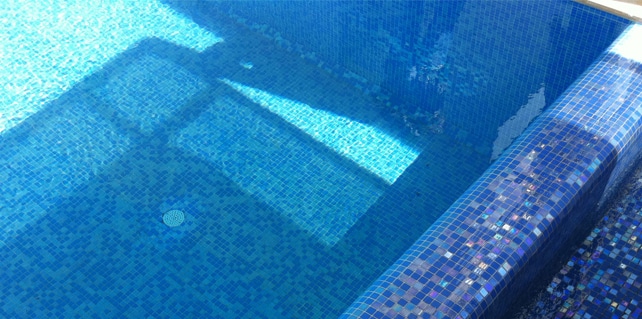
The adhesive is used to adhere the tiles to the mesh sheet. However, with time, it degrades, allowing the tiles to separate from their backing. They start to pop off because most of the adhesion occurs on the mesh and less on the tiles. As a result of the enhanced surface exposure provided dot-mounted technology, higher adhesion to the back of the tile is possible.
This gives a competent tiler more freedom in manipulating the joints and bedding them deeply into the glue.
Glass Mosaics on a Dot Mounted Base
It might be difficult to lay dot-mounted glass mosaics. We usually advise hiring a skilled tradesperson with a lot of expertise. This is because the glass mosaics are often half the thickness of regular tiles (normally around 5mm).
When using a 4mm-6mm notched trowel to apply tile adhesive to the rendered pool wall (depending on the size of the mosaic sheet), firmly press the tile into the glue and then apply your grout.
The adhesive pushes through the joints, according to most tilers and pool owners.
This makes grouting the joint lines difficult since dirty grey glue residue will usually push through. Against the freshly placed grout, this seems filthy or moldy.
There is a Simple yet Effective Option Accessible.
Some manufacturers have produced a glass mosaic ingredient that can be mixed with the grout and effectively turns into glue. To glue and grout your tiles, use the two items, glass mosaic additive, and grout. Always follow the manufacturer’s directions for combining the two products at each step of your tile installation.
We are a top-rated pool tiling Sydney company specialising in fully tiled swimming pools and providing the highest standard of quality.


