
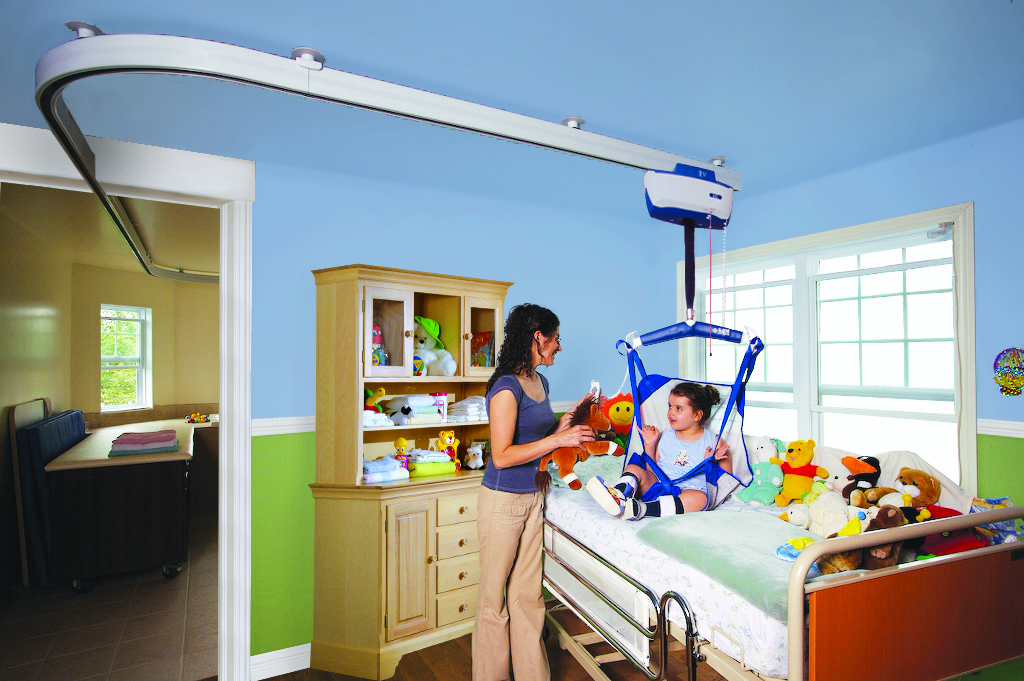
A ceiling lift is a fixed device used for safely lifting and moving individuals who struggle with independent mobility. Lifts are used for transfers; they facilitate movement between beds, chairs, toilets, wheelchairs, and other locations. Ceiling lifts are an invaluable mobility assist for elderly individuals with balance and stability issues, people living with paralysis, patients recovering from surgery or injury, and many others.
Ceiling lifts provide a number of significant benefits, including the following:
- Reduce the physical exertion necessary from both parties when making transfers.
- Minimize the chance of injury to the patient during a transfer.
- Minimize the chance of injury to the caregiver during transfers.
- Increase comfort during movement.
- Eliminate the clutter and disorder of wheel-based lifts.
- Reduce the number of caregivers needed to make safe movements.
Given these significant benefits, it’s no wonder ceiling lifts are a sought-after patient lifting method in home and clinical settings.
Table of Contents
Choosing the Best Ceiling Lift
Ceiling lifts move the patient along an overhead track or rail system in a safe and comfortable seat. Rail systems can be permanently mounted to the ceiling, or they can be freestanding. Freestanding or portable lifts, while not technically “ceiling” lifts, still fall in this category of lifts because they use an overhead track system as opposed to other devices that sit on the floor and use wheels.
Let’s take a closer look at your options when choosing a new ceiling lift:
Freestanding or Permanent
Permanent lifts use tracks that are permanently attached to the ceiling. The seats are affixed to the track and remain so at all times. These are a good, cost-effective option when you only need the lift in one location, say, for example, to facilitate transfers from the bed to the bathroom. Freestanding lifts have portable frames and seats, which allow both the lift and the frame to be moved to other locations.
Motor Function
All ceiling lifts will have up-down motor functionality; that’s a given. However, some also motorize movement along the track while others require the caregiver to manually push the patient one lifted.
Weight Capacity
Most lifts safely support weights up to 450 pounds. Bariatric lifts are available if you need a higher capacity.
Lift Range
Ceiling lifts come with a variety of lifting ranges – the maximum height they are able to lift the patient. To ensure that your lift can accommodate your needs, talk to your mobility device dealer.
Sling Options
The seat in a ceiling lift is called a sling. Slings are typically sold separately, given you the opportunity to find one that suits your needs perfectly. Different slings offer different levels of support and comfort. They also come in different sizes, so fit is important as well.
Summary
Ceiling lifts make transfers safe and comfortable for both the patient and the caregiver. They are an important tool that makes living at home possible for many individuals struggling with mobility issues.


